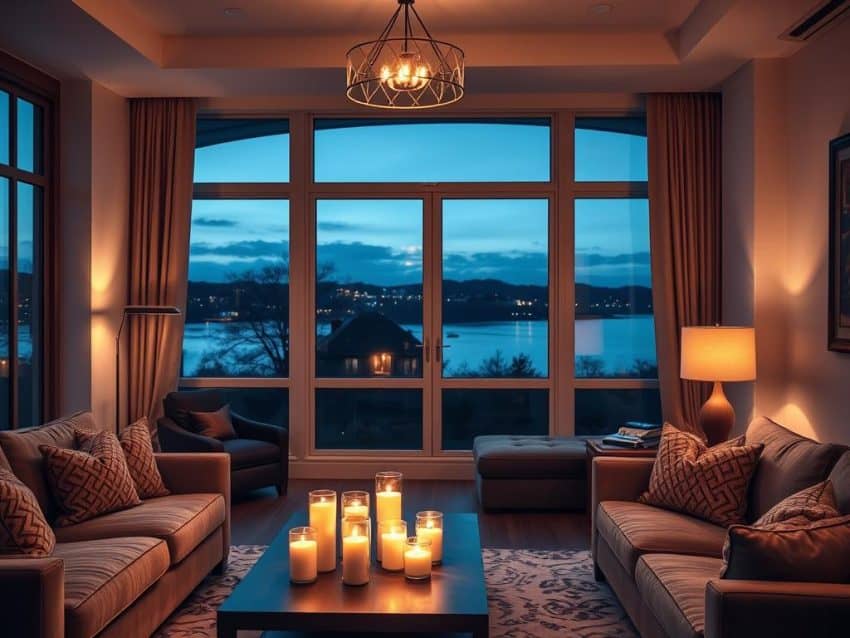
Did you know that about 50% of people say wall lighting makes living spaces feel better? This shows how big of a role lighting plays in how we feel in a room. The right lighting can turn a simple area into a cozy, welcoming place. It makes the space look good and feel good too.
Let’s explore how different lights can change the mood of a room. We can make a space lively or calm, depending on what we need. By playing with light colors, brightness, and mixing light sources, we can create the perfect mood for any room. Let’s dive into the world of mood lighting and how it shapes modern interior design.
Key Takeaways
- Mood lighting significantly influences feelings within a space.
- Combining different light sources enhances atmosphere and functionality.
- Choosing the right color temperature is essential for creating cozy spaces.
- Dimmable lights offer flexibility for mood variations at different times of day.
- Using multiple lamps can increase warmth and intimacy in a room.
Understanding the Importance of Mood Lighting in Design
Mood lighting is key in interior design, shaping both emotion and atmosphere. The right lighting can change a room, making it welcoming or boosting productivity. Different lighting fixtures are vital for these effects, from general light to focused beams.
How Lighting Influences Emotion and Atmosphere
Lighting’s psychological impact is deep, affecting our feelings greatly. Bright lights make us more alert, perfect for places needing focus. Soft lights, on the other hand, create a calm mood, improving comfort and closeness.
Studies show bad lighting can cut job satisfaction by 15%. The right color temperature, like warmer tones, can also boost feelings. These are often used in homes and hotels.
Different Types of Mood Lighting
There are many mood lighting options for design. Ambient lighting sets the basic light level. Task lighting helps with activities like reading or cooking. Accent lighting highlights specific areas or features.
Each lighting type affects a space’s look and feel. For example, soft lights in restaurants can increase sales by 25%. Mixing these lights creates a balanced space that’s both functional and beautiful.
Mood Lighting in Design: Practical Tips for Implementation
To get mood lighting right, you need to know about color temperature, layering light sources, and natural light. Each part is key to setting the mood in any space.
Choosing the Right Color Temperature
When picking lights for a room, think about the color temperature. It greatly affects the mood. The Kelvin scale helps us understand different colors.
Warm light, under 3000K, is great for cozy spots like living rooms and bedrooms. About 60% of people love it here. On the other hand, cooler lights, from 3000K to 4500K, are best for kitchens, adding energy for about 30% of the time. Daylight, starting at 4500K, is perfect for areas needing lots of light, like craft rooms.
Layering Light Sources
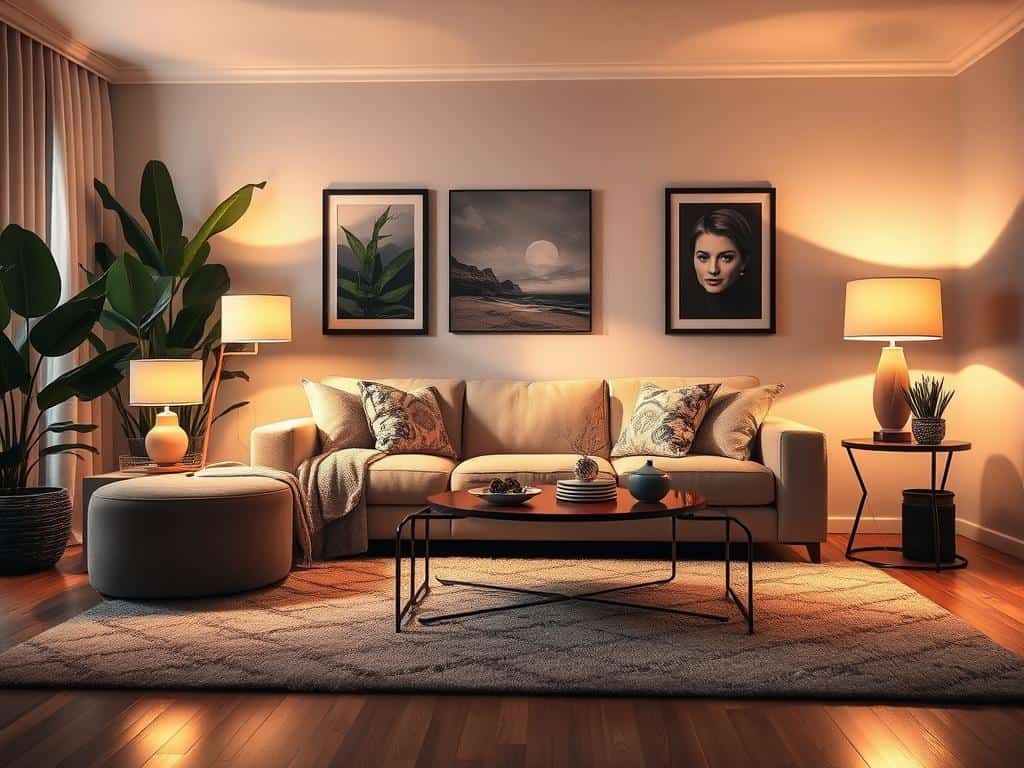
Using various light sources is vital for depth and function in a room. I aim for layering light sources—ambient, task, and accent lighting—to improve how we see space. A good lighting plan might include 3 to 5 types of lights, making a space welcoming.
Now, 70% of homeowners can adjust brightness and color with mood lighting fixtures. This makes lighting more personal.
Using Natural Light Effectively
Using natural light is another key tip. Simple steps like opening blinds and placing mirrors can boost light. Natural light brightens rooms and adds to the mood.
Studies show rooms with plenty of natural light feel bigger and happier. It boosts well-being.
Conclusion
Mastering mood lighting is key to creating stunning interior spaces. It reflects my personality and boosts comfort and function. This summary shows how light affects our emotions and atmosphere.
By choosing the right color temperatures and layering light sources, I can make any room cozy. Natural light plays a big role in this transformation.
Using mood lighting techniques takes my design to the next level. Layered lighting, as 80% of designers suggest, makes spaces visually appealing. This creates cozy spaces that feel warm and inviting.
Good mood lighting not only makes a room look better but also improves my well-being. By using these strategies, I design interiors that touch the heart. They feel personal and welcoming, making my home feel like a true sanctuary.
