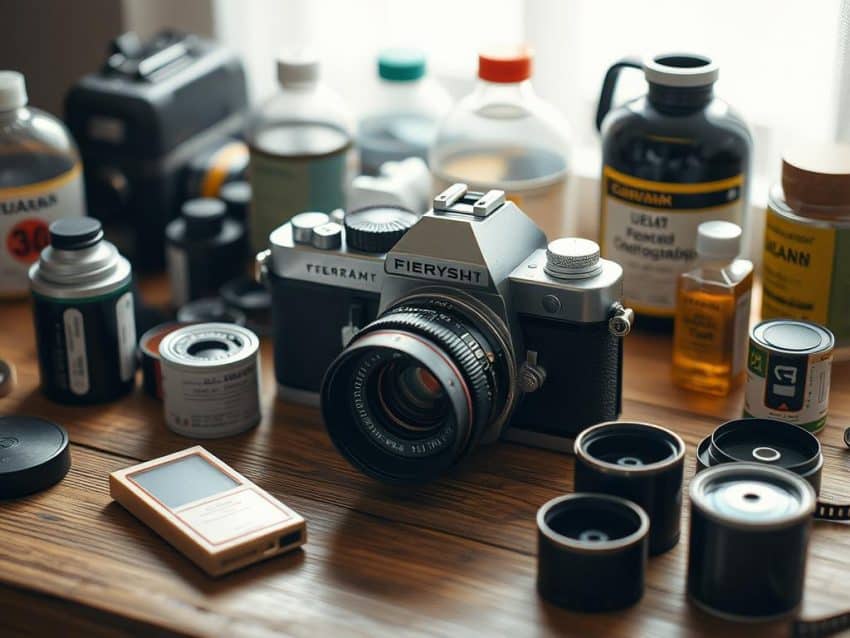
Did you know a roll of film has only 24 to 36 shots? This is a big difference from digital cameras, which can take over 400 pictures in one go. This limited number makes film photography special. It makes each photo count more.
Film photography is making a comeback, thanks to digital photographers looking for something different. They love the feel and look of old cameras. This journey is not just about taking pictures. It’s about getting back to the true spirit of photography.
In this article, I’ll share tips for digital photographers wanting to try film. It’s a chance to explore a new way of capturing life’s moments.
Key Takeaways
- Film typically allows for fewer exposures per roll, promoting more thoughtful shooting.
- Analog cameras can evoke a sense of nostalgia and creativity for modern photographers.
- Different film stocks cater to various styles, enriching the final image quality.
- Exploring affordable options can make film photography more accessible.
- Understanding film formats is key to picking the right camera for your needs.
Understanding the Basics of Film Photography
Film photography is making a comeback, attracting many photographers with its unique charm. It uses a chemical emulsion on light-sensitive plastic, unlike digital cameras. This method offers grain and texture, making each photo special.
These photos often tell stories that bring back memories. They highlight details that digital cameras might miss.
What is Film Photography?
Film photography is a traditional way to take pictures. It uses film rolls that need to be developed, creating a real, tangible result. This process is loved by many artists and hobbyists.
From picking the right camera to developing photos in a darkroom, it’s a unique experience. It offers anticipation that digital photography can’t match.
Types of Film Cameras to Consider
Choosing the right film camera is key. SLR cameras, like the Canon AE-1 and Nikon F series, are popular. They offer familiar features found in digital cameras.
Rangefinder cameras, like the Leica M series, are great for street and travel photography. They’re small but powerful. Point-and-shoot cameras, such as the Olympus Stylus Epic, are perfect for beginners or casual shooters.
Twin-Lens Reflex (TLR) cameras provide top-notch image quality. They may have fewer shots per roll, but they’re worth it for the quality.
Why Choose Film Photography?
Film photography offers more than just beautiful pictures. It’s a hands-on experience that connects you to the craft. Many photographers have 4-5 favorite cameras and 5-10 backups for different situations.
This level of involvement encourages exploring different photography techniques and styles. It makes the creative process richer and more rewarding.
Getting Started with Analog Cameras
Starting with analog cameras opens a world of photography that’s different from digital. I love the feel of film, making each photo more special. Choosing your first film camera is exciting but can feel overwhelming. Knowing the options helps me enjoy my journey into film photography.
Selecting Your First Film Camera
I suggest looking at popular models like the Canon AE-1. This 35mm SLR is great for manual settings and works with many lenses. It’s sturdy, reliable, and fits well with digital formats. Used cameras, including vintage ones, can cost between $200 and $400.
Understanding Different Film Formats
35mm is the most common and easy to start with. It’s perfect for beginners. The Kodak EKTAR H35 Half Frame Camera is unique, giving you 72 photos per roll. Trying different films, like Kodak Portra 400 or Kodak Gold 200, lets you express your creativity in each photo.
Where to Find Affordable Film Cameras
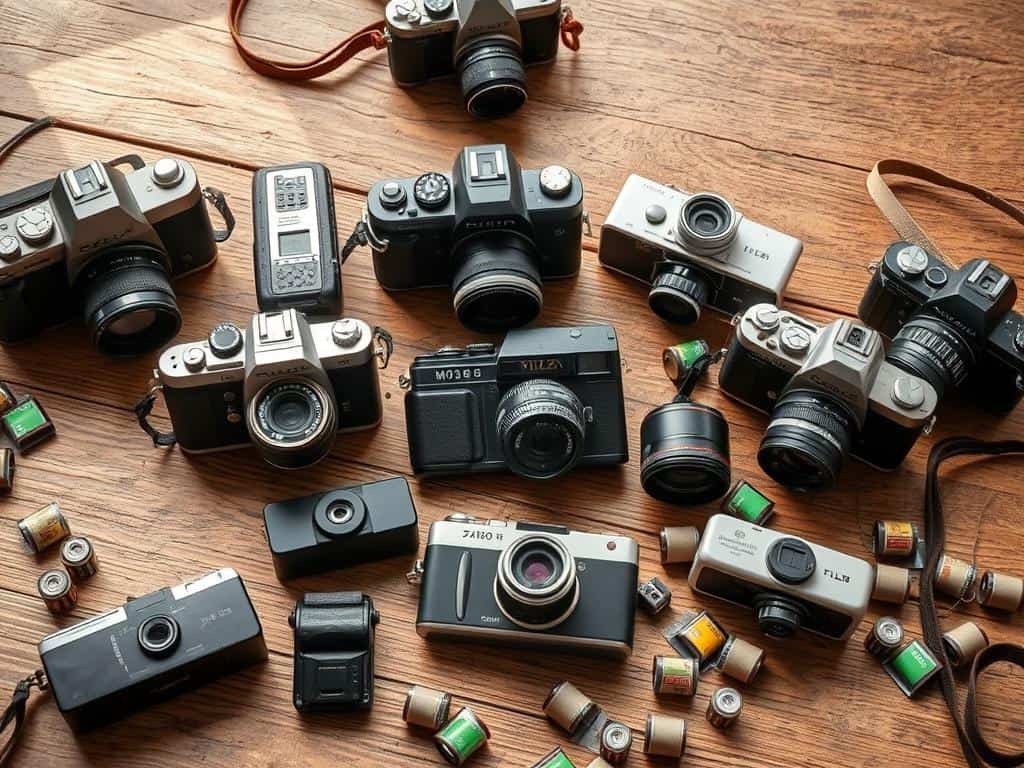
Finding cheap film cameras is easier than you think. Thrift shops, online sites, and local camera stores have great deals. Prices vary from $50 to $400, depending on the camera’s state and features. I enjoy finding a good deal that lets me explore analog photography.
Film Photography Techniques for Digital Shooters
Exploring film photography, I find a mix of techniques that boost my skills. These methods add depth to my photography. I learn about picking film stock, adjusting my style, and handling light.
How to Choose the Right Film Stock
Choosing the right film is key for any project. Kodak Portra 400 is great for beginners, capturing beautiful skin tones. Fujifilm PRO400H is perfect for portraits, and Kodak Tri-X 400 is forgiving. Trying different films helps me find what works best for me.
Adjusting Your Shooting Style for Film
Switching to film changes how I shoot. With only 24 to 36 shots per roll, I’m more careful. I take no more than 10 photos per scene, making each shot count.
This approach helps me focus on the Golden Ratio and Rule of Thirds. It makes my photos more intentional and well-composed.
Tips for Shooting in Different Lighting Conditions
Lighting affects my film photos a lot. I master the exposure triangle to handle different lights. In bright light, I use a lower ISO for better grain. In dim light, I adjust based on the film’s characteristics.
Being flexible is key, even with manual focus. Analog cameras’ slower autofocus helps in controlled light.
Conclusion
Starting my film photography journey was enlightening and rewarding. I found that film offers more than just technical skills—it lets me connect deeply with my subjects. Choosing the right camera and film stock has shown me the beauty of analog photography.
Exploring different film formats, I saw how versatile film photography is. While digital is quick and easy, film makes me think more about each shot. For example, 35mm film can match the quality of a 6 to 8 megapixel digital camera.
My journey has shown me that film photography opens up new creative paths. It captures moments like a sunset or a friend’s joy in a way digital can’t. Embracing film has deepened my appreciation for photography and given me a unique voice.
