
Did you know a balanced design can boost viewer retention by up to 45%? This shows how important balance is in design. It creates harmony that people love. Andrew Wyeth said balance is about arranging elements well, creating movement in the design.
It’s key to remember balance doesn’t mean everything must be equal. It’s about placing elements in a way that no one thing dominates the whole picture.
Learning about symmetrical, asymmetrical, and radial balance can change how we design. It makes design more accessible for everyone. Whether you’re making a website or a poster, knowing these concepts can make your work look better and engage people more. Let’s explore how to use these balances in your designs.
Key Takeaways
- Balance in design is key for visual harmony and better viewer retention.
- Knowing different balances can make your designs more engaging and satisfying.
- Symmetrical, asymmetrical, and radial balances each bring unique strengths to design.
- Good balance means a smooth composition where no element is too dominant.
- Using these principles can greatly improve your design’s effectiveness.
Understanding Balance in Design
Balance in design is key to making things look good and work well. It’s about spreading out the visual weight of elements. This makes the design stable and looks good together.
It’s not about everything being equal. Balance means each part adds something special to the whole design.
Definition of Balance
Balance is about finding equilibrium in visual weight. A good design uses this to create unity. I’ve seen that using different shapes and sizes can make a design stand out.
This approach avoids the usual split of elements. It makes the design interesting and engaging.
Importance of Balance
Balance is very important. It makes things clear and easy to understand. Without it, designs can look messy and confusing.
I aim to use balance to make designs simple and clear. It helps guide the viewer’s eye and makes the message clear.
Types of Balance in Design
Learning about different balance types in design can really boost visual appeal and stability in our work. Each type offers special ways to share messages and keep things looking good.
Symmetrical Balance
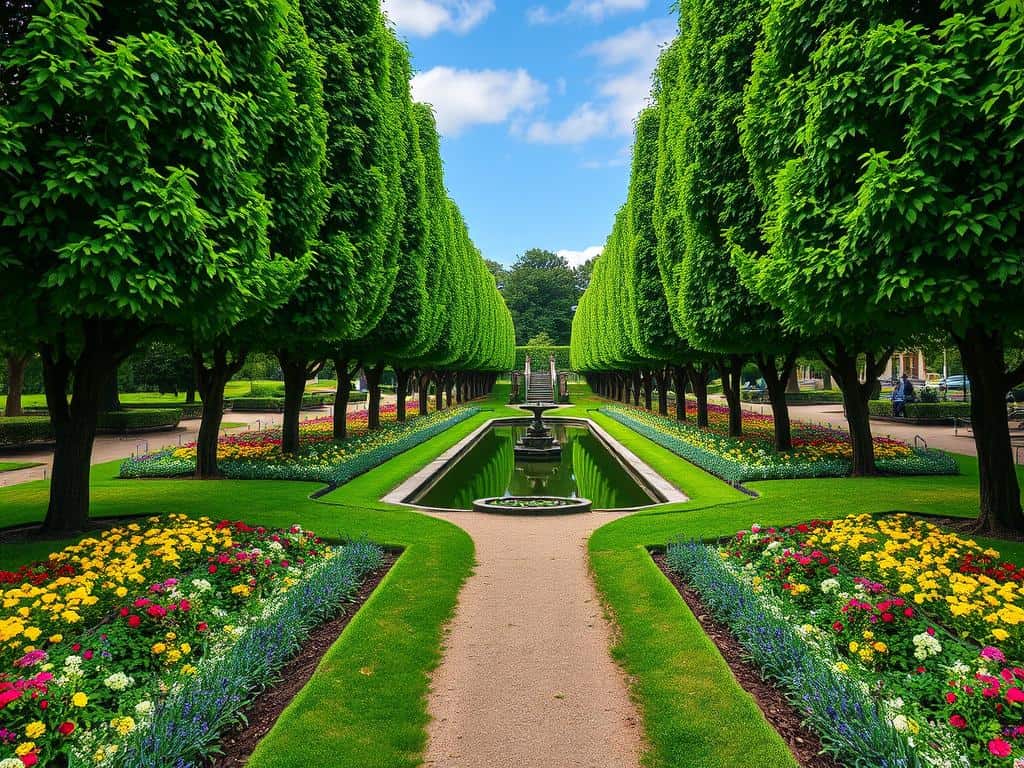
Symmetrical balance means equal weight on both sides of a center point. This can be horizontal, vertical, or diagonal. It often looks formal and stable, which many people like.
Humans are naturally drawn to symmetrical things, like faces. This can affect what we like in design. In places like homes, symmetrical designs can make things feel calm and peaceful.
Asymmetrical Balance
Asymmetrical balance, on the other hand, uses different shapes and sizes to find balance. It doesn’t mirror itself. This requires creativity to keep things interesting without looking too uniform.
Asymmetrical designs can be lively and full of energy. They grab our attention by playing with size and distance. This makes them engaging and dynamic.
Radial Balance
Radial balance pulls the eye to a central point, with elements spreading out from it. It often looks like natural patterns, like flowers or waves. This creates a calming effect.
I love how radial balance naturally draws our eye, making things more interesting and stable. For example, a sunflower shows how balance can be both planned and natural.
How to Achieve Balance in Design
Getting balance in design is key to making any project look good and work well. It starts with planning your composition well. This sets up a solid layout. Knowing what kind of balance you want—symmetrical, asymmetrical, or radial—helps match your goals with the final look.
Plan Your Composition
At the start of a project, I think carefully about the composition. I decide on the balance type I aim for. This helps me arrange my design elements better.
Keeping a clear visual flow means planning where each element goes. This makes sure the design gets its message across without being too much.
Establish a Focal Point
A strong focal point is the heart of the design. It pulls the viewer’s eye and sets off the other visuals. I place it thoughtfully, considering its size and color.
This makes the design look unified. Using different colors or sizes makes the focal point stand out more, adding to the balance.
Experiment with Arrangement
Trying out different setups is important for balance. I like to see how elements work together. Using templates or grids helps keep things even.
Exploring different layouts leads to creative ideas. It helps me fine-tune the design until it feels perfect.
Conclusion
Mastering balance is key to making designs that grab attention and stick with you. I’ve learned about different balances like symmetrical, asymmetrical, and radial. These help make sure a design looks good and connects with the viewer.
Visual weight is also important in design. Big and complex elements draw the eye, guiding it through the design. Using balance well can make a design more engaging and impactful. In fact, balanced designs can grab viewers 30% more than chaotic ones.
In short, creating balanced designs is an art that can make simple ideas powerful. It involves playing with arrangement, setting focal points, and considering weight. This skill makes designs more cohesive, appealing, and successful, leaving a lasting impression on viewers.
