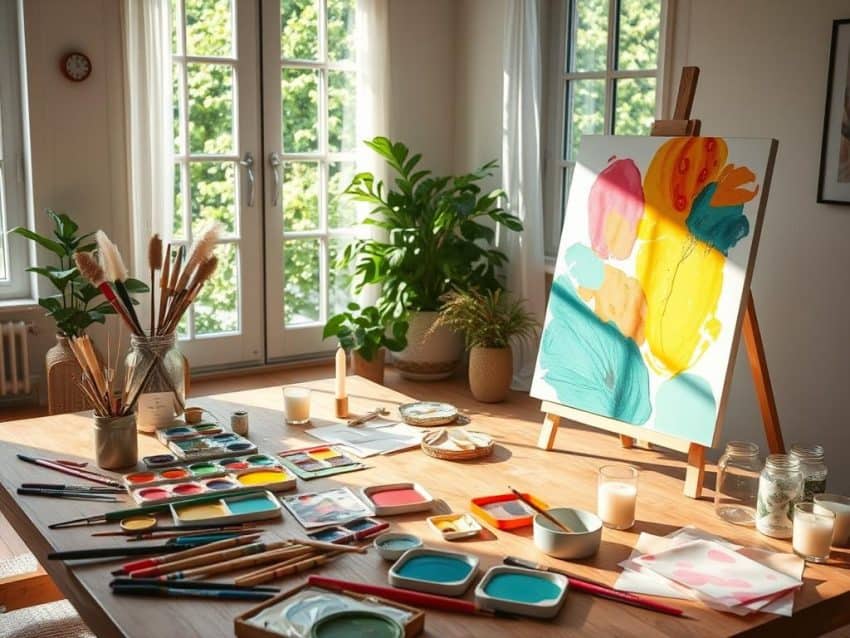
Did you know about 75% of adults might feel they’re not creative or artistic enough for art therapy? This shows a big chance for change through this new self-care method. As we focus more on our mental health, art therapy shines as a key way to heal.
Art therapy helps people express themselves in new ways, which can be hard with words alone. It lets us deal with feelings, overcome trauma, and relax. It’s not just a trend; it’s a sign we’re valuing our whole well-being more.
Key Takeaways
- Art therapy is a transformative self-care practice that utilizes creativity for emotional expression.
- Engaging in creative activities can significantly reduce stress and enhance mental well-being.
- Art therapy addresses various psychological issues like trauma, anxiety, and depression.
- The profession has been recognized for over 30 years, gaining relevance in mental health treatment.
- Creative outlets facilitate increased self-awareness and better emotional articulation.
- Art therapy promotes relaxation and invokes feelings of tranquility through creative engagement.
- Participation in art activities can lead to improved socialization and a sense of identity.
The Healing Power of Creativity
Art therapy is all about the healing power of creativity. It lets people express their feelings in ways words can’t. This creative outlet can calm the mind and reduce stress.
It’s interesting to see how art therapy has roots in ancient philosophies. These philosophies saw art as a way to release emotions.
Understanding Art Therapy
Art therapy is a way to express oneself. Trained professionals help people explore their emotions through art. This helps grow emotionally and build resilience.
Many find it easier to share their feelings through art. It helps them understand themselves better.
The Impact of Art on Mental Health
Art has a big impact on mental health. It can make people feel happier and less anxious. It boosts self-esteem and confidence.
Art also improves problem-solving skills. It makes the mind more flexible and supports overall well-being. New methods like virtual reality in art therapy are being explored.
Places like Splatter Studio offer art sessions for therapy. They help people express their emotions and improve their mental health.
Art Therapy Benefits
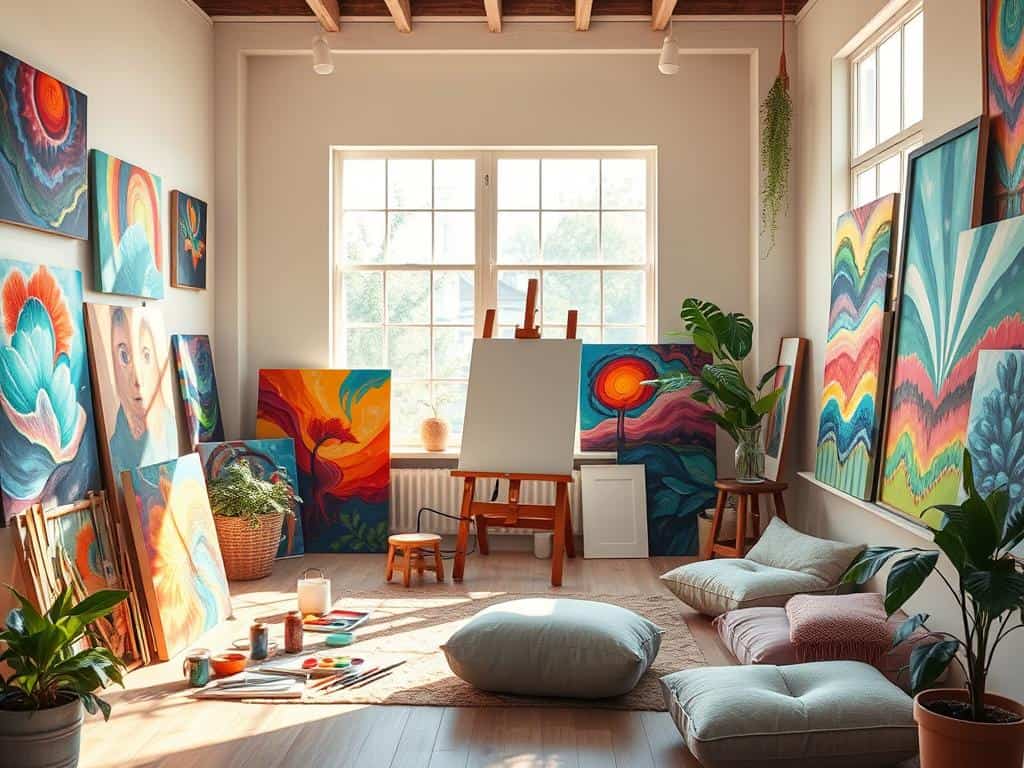
Art therapy helps a lot with stress and relaxation. Activities like painting and drawing are great for letting out tension. They help us forget about daily worries and lower our stress levels.
Studies show that making art for 45 minutes a day can lower cortisol levels. It helps us relax and feel more fulfilled. This is key for dealing with anxiety and stress today.
Stress Reduction and Relaxation
Making art is a great way to relax. It uses creative activities to improve our well-being. It’s a holistic way to handle mental health, bringing calm in chaotic times.
Research shows art therapy reduces stress. It also helps people deal with their feelings in a peaceful way.
Enhancing Emotional Expression
Art therapy helps people express their feelings better. It lets them explore and release emotions, even about tough experiences like trauma. It’s a way to show feelings without words.
It’s for everyone, no matter their artistic skill. It creates a safe space for true expression.
Supporting Mental Wellness
Art therapy supports mental wellness by looking at health as a whole. It helps with anxiety and depression. It encourages people to face their feelings and grow.
It’s shown to improve thinking and emotional strength, even in older adults and those with long-term illnesses. It’s a valuable part of mental health care, boosting self-confidence and overall well-being.
Conclusion
The rise of art therapy shows how creativity and mental health are closely linked. It helps people explore themselves and release emotions. This way, they can better understand their feelings.
Art therapy also helps lower stress and builds a deeper connection with oneself. It’s a key part of achieving overall wellness.
Art therapy is vital for tackling mental health issues. Mental and behavioral problems are a big part of global health problems. Creative activities offer a way to build resilience.
Unfortunately, many people with psychosis don’t get the care they need. This makes art therapy a valuable and accessible self-care option.
As we focus more on mental health, art therapy becomes even more important. It helps grow personally and improves community well-being. It shows us that creativity can heal and connect us all.
