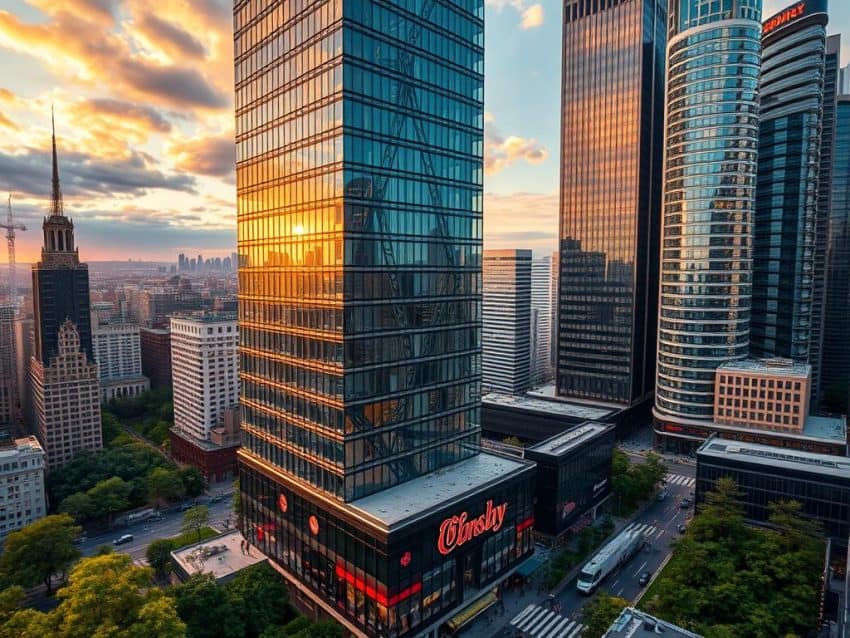
Did you know that about 70% of what makes architectural photos great comes from how they’re composed? This includes balance, symmetry, and leading lines. These elements are key in how we see and feel about a photo.
Architectural photography has grown into a powerful tool. It turns buildings into amazing images that share stories. With social media, like Instagram, more people are interested in famous buildings. For example, the Cloud Gate in Chicago or La Muralla Roja in Calpe.
Using simple compositions and blurred figures can make your photos stand out. If you’re just starting, practicing at home is a good idea. It helps you get better at taking photos in different places.
Having a portfolio that shows both famous and local buildings is important. It makes your photos personal and meaningful.
Key Takeaways
- Composition techniques significantly influence viewer engagement in architectural photography.
- Familiarity with minimalist styles can enhance the storytelling of architectural images.
- Practicing with local architecture helps in skill development for budding photographers.
- A diverse portfolio can include both famous landmarks and local structures to create personal relevance.
- Social media trends can drive engagement and interest in architectural photography.
Exploring the Basics of Architectural Photography
Getting the basics right is key to taking amazing architectural photos. I work on mastering composition, choosing the right gear, and using natural light. Each step is important for creating stunning images.
Understanding Composition Techniques
Composition is vital in architectural photography. Using the rule of thirds and leading lines helps draw the viewer’s eye. Symmetry adds balance, seen in building designs. I also play with different angles, like arches, to frame my shots.
Choosing the Right Equipment
Choosing the right equipment is critical for quality images. I use DSLRs with full-frame sensors for their top-notch image quality. Wide-angle lenses capture big scenes, and tilt-shift lenses fix perspective issues with tall buildings.
A sturdy tripod is essential for stable shots, even in low light. It keeps my camera steady during long exposures.
Utilizing Natural Light
Natural light makes architectural photos look great. I plan shoots for the golden hour for its soft, warm light. The blue hour, just before sunrise and after sunset, adds drama to my photos.
Knowing how light affects architecture brings out the best in buildings. It adds depth and emotion to my images.
Creative Ideas for Capturing Architectural Masterpieces
In my journey through architectural photography, I’ve found many techniques to make it more exciting. Using creative ideas can make buildings look amazing. By trying different angles and views, I can show off a building’s unique features.
Playing with Angles and Perspectives
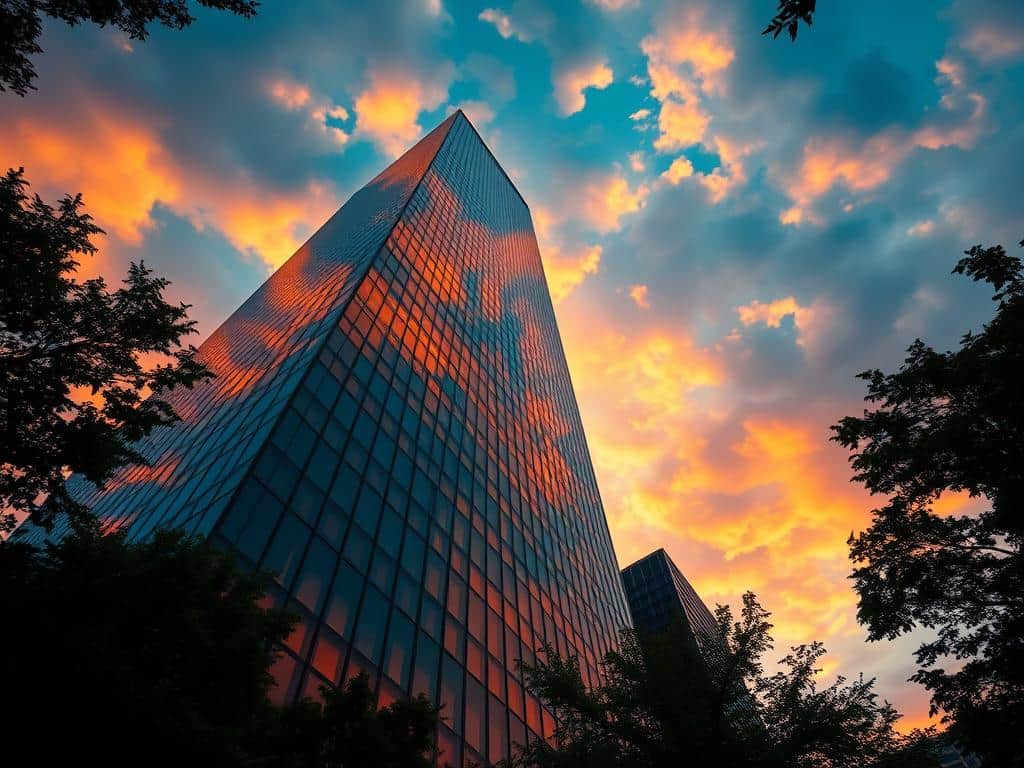
Trying out angles and perspectives is key for great architectural photos. Low-angle shots make buildings look grand and awe-inspiring. Shooting from unusual spots can reveal details that are easy to miss. These views not only show off the building’s design but also connect it with its surroundings.
Incorporating Elements of Scale
Adding elements that show scale in photography makes images more impactful. Including people, trees, or cars in the shot helps viewers understand a building’s size. This adds depth and context, making the photo more engaging. It shows how the building fits into its environment, giving viewers a deeper experience.
Utilizing Reflections for Dynamic Imagery
Reflections in architecture add depth and complexity to photos. The play between glass buildings and their reflections creates stunning images. Water, like ponds or puddles, can also mirror surroundings, enriching the scene. Exploring these reflective elements can turn a simple architectural shot into something truly captivating.
Architectural Photography Tips for Stunning Results
Getting great results in architectural photography takes some tips. Finding unique spots and mastering minimalist style can really boost your work. Keeping edits natural is also key to keeping images true to their form.
Finding Unique Locations and Contexts
Looking for special places can reveal hidden architectural treasures. Urban exploration lets you see many styles, from new to old. Knowing a building’s history before you shoot can add a rich story to your photos.
Mastering the Art of Minimalism
Minimalist photography is all about simplicity. It lets the building’s features shine by removing clutter. Using the right framing and perspective helps keep the focus on the architecture.
Keeping Edits Natural and Authentic
It’s important to keep architectural photos real. I make small edits to improve clarity and keep the image true. Using tools like Lightroom helps the building’s beauty stand out, letting viewers enjoy it as it is.
Conclusion
Architectural photography is more than just taking pictures of buildings. It’s an art form that captures the essence and story behind structures. By exploring architectural photography ideas, I’ve learned the importance of mastering composition techniques and choosing the right equipment.
Using natural light effectively is key to creating stunning shots. This art form emerged in the late 19th century. It has evolved with camera technology advancements, documenting historical buildings and archaeological sites.
With the right approach, I can take breathtaking images that resonate with viewers. Using tools like tilt-shift lenses and sturdy tripods helps me minimize distortion and maintain sharpness. Practicing creative photography through perspective techniques and exploring various contexts enhances my portfolio and deepens my connection with the architecture.
The journey in architectural photography requires continuous experimentation and learning. As I refine my skills, using software for post-processing becomes essential. This makes the world of architecture come alive. Whether using a professional camera or a smartphone, the possibilities for creative exploration are endless.
