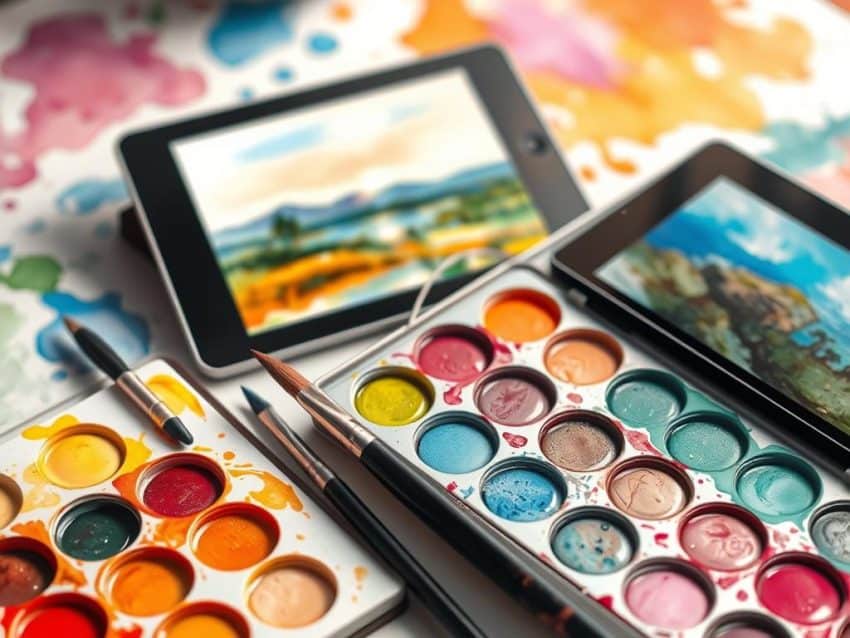
Did you know digital art can look amazing without pixelation? This is a big deal in watercolor design. Artists can now mix old-school techniques with new tech. This mix lets them create digital watercolors that are flexible and keep the beauty of traditional art.
I’m diving into this new world, where digital watercolor meets traditional art. New tech lets artists use special brushes and textures that feel real. Learning these skills helps me make my art look deeper and more detailed. It also helps me deal with the challenges of traditional art.
Key Takeaways
- Digital art techniques allow for high-quality rendering without pixelation.
- The blend of traditional and digital methods creates vibrant and fluid artwork.
- Customizable watercolor brushes and textures enhance the artistic process.
- Understanding layering and blending is critical for effective digital watercolor.
- Utilizing advanced pigment mixing technology can replicate traditional techniques.
Introduction to Watercolor Design Techniques
Watercolor design has changed a lot with digital tools. Knowing the difference between digital and traditional watercolor helps me in my art. Traditional watercolor uses paint on wet or dry paper, creating unique “bleeding” effects.
Digital watercolor has its own challenges and benefits. It lacks wet paper, making some traditional effects hard to achieve. But, digital tools offer flexibility that makes up for this.
Understanding Digital Watercolor vs. Traditional Watercolor
With traditional watercolor, I focus on handling paint and water. Skills like the rule of thirds and negative space help my art. It also needs good muscle memory for light pencil strokes.
Digital watercolor lets me undo mistakes and try new things easily. Tools like Clip Studio Paint offer control and scalability. This digital world boosts my creativity while keeping watercolor’s spirit alive.
Benefits of Digital Watercolor
Digital painting has many benefits. It dries quickly, letting me work faster. I can also simplify subjects into basic shapes, focusing on the essence first.
Varying line weights adds depth and character to my sketches. Expressive lines show movement and emotion. Resources like “Sketch & Paint” help beginners learn watercolor techniques. Using both digital and traditional methods opens up endless artistic possibilities.
Watercolor Design Techniques for Beginners
Starting with watercolor techniques is thrilling. Learning the basics, like the wet on dry method and underpainting, is key. It helps me get better at adding colors and moving from light to dark shades. This makes my art more expressive.
Wet on Dry Technique
The wet on dry technique is a favorite among watercolor artists. It means painting wet colors on dry paper for better control. The paint dries fast, letting me layer colors without bleeding.
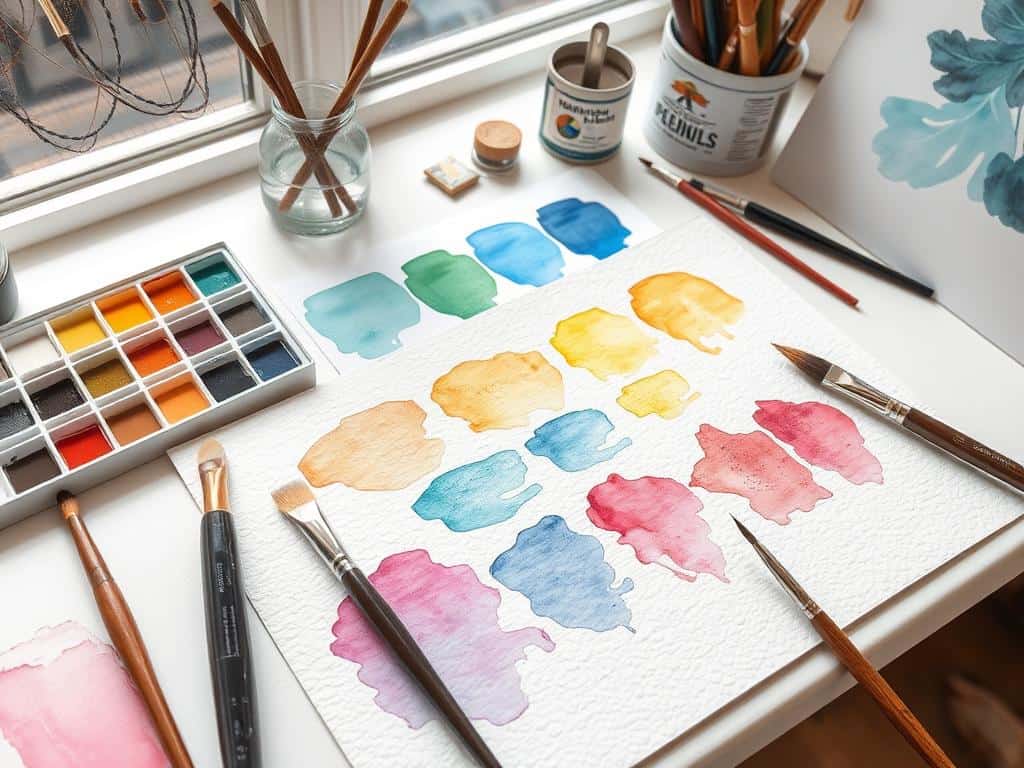
I test colors by doing swatches. This helps me know how they’ll mix and blend. It’s important for getting the right look in my art.
Using Underpainting Effectively
Underpainting is a smart way to improve my art. It helps colors work together and prepares for more detailed work. I start with light washes.
As I add more layers, colors change. For example, mixing cadmium yellow light with ultramarine blue makes a bright green. This shows how underpainting can change colors and inspire my art.
Building Color from Light to Dark
Learning to build color from light to dark is important. I start with light washes and then add darker shades. This lets me play with color and create depth.
Adding layers makes colors richer and more interesting. It’s key for creating shadows and highlights. This freedom lets me be more spontaneous, like in painting flowers or landscapes.
Conclusion
Learning watercolor design in digital art is a journey that changes how I create. It mixes old skills with new tools, letting me try many styles. I’ve found that starting with underpainting and building up helps me get better.
This journey in digital watercolor opens up new chances for my projects. I’ve learned how changing water-to-paint ratios can change my art. Knowing about pigment, layering, and color helps me avoid mistakes like muddy colors.
Using the right materials, like Holbein paints and Princeton brushes, makes a big difference. I keep learning and using new techniques. This journey is all about discovering and growing, showing the endless possibilities of digital watercolor art.
