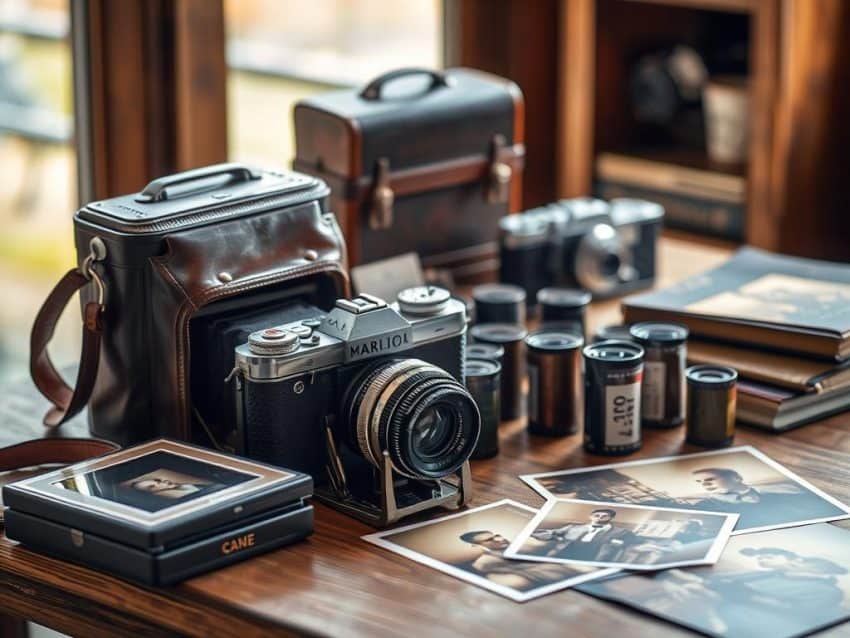
Did you know over 100,000 individuals trust a weekly photography tips newsletter? Vintage photography is an art form that brings back the charm of the past. It lets us relive moments through timeless beauty. With apps like VSCO and Afterlight, getting a vintage look is easy for anyone, even beginners.
In this article, we’ll look at how vintage editing can turn simple photos into stunning works of art. We’ll cover the basics of vintage photography and how to use advanced editing tools. By adding sepia tones and textures, you can make your photos feel nostalgic and elegant. Let’s explore the world of vintage photography together and learn how to create images that feel both old and new.
Key Takeaways
- Vintage photography blends historical aesthetics with modern techniques.
- Employ retro filters and editing tools for a timeless look.
- Understanding light leaks and textures enhances authenticity.
- Editing plays a critical role, affecting up to 70% of image quality.
- Subtle adjustments in saturation and exposure create a moodier feel.
- Popular apps like VSCO provide extensive editing options for vintage effects.
Understanding Vintage Photography
Vintage photography is a mix of style and emotion. It spans from 1826 to the 1990s, each era adding its own touch. The look is known for soft tones, grainy textures, and faded colors, taking us back in time.
What Defines the Vintage Look?
The vintage look has lower color saturation and reduced contrast. It often has a yellow tint. Photos from this time are softer with a grainy feel, thanks to old cameras.
Vintage aesthetics are found in portraits, wedding photos, and more. The hazy effects and vignetting add to their timeless charm.
Why Vintage Aesthetics Matter
Vintage aesthetics are special because they bring back memories. They make us feel connected to the past. Looking at old family albums and classic films gives me vintage photography inspiration.
Using these styles in modern photography adds history and authenticity. It lets me express my own artistic voice while honoring the past.
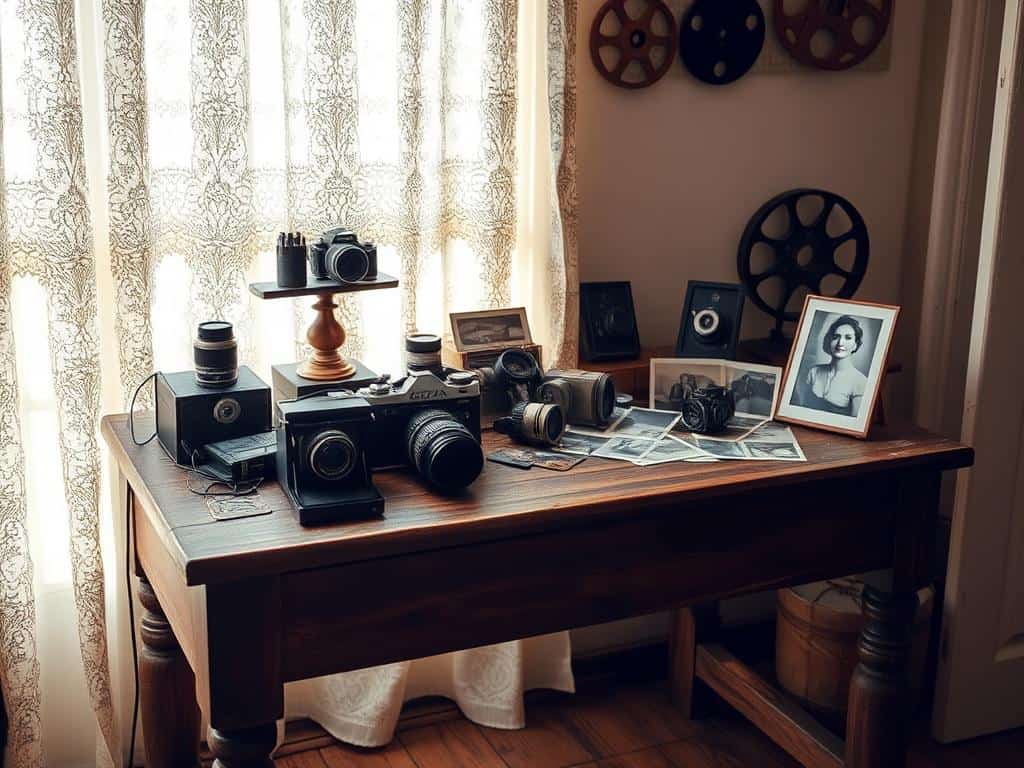
Techniques for Achieving a Vintage Effect
To get a stunning vintage look in photos, I use many techniques. Filters and editing tools are key. For example, presets in Adobe Lightroom or VSCO apps give me a quick retro filter. These presets have warm tones and grain, making photos feel nostalgic.
Use Filters and Editing Tools
Choosing the right tools is key for a vintage look. I look for filters that balance color and texture well. Filters can change color temperature and add light leaks, making images captivating. Having many presets, like Lightroom’s 75 for vintage, is also helpful.
Adjust Color and Brightness
Adjusting color and brightness is another important step. I aim for purple shadows and yellow highlights, common in vintage photos. By reducing saturation and brightening certain areas, I get that timeless look. This makes images warm and nostalgic, a favorite among 70% of photographers.
Add Noise and Texture
To add texture, I add noise to my photos. A bit of grain gives them a worn look, typical of vintage photos. Adding textures like dust and scratches makes photos feel more connected to the past. Decreasing clarity and sharpening carefully adds that soft, retro feel.
Conclusion
Getting a stunning vintage look in photos is a creative mix of old and new. It uses modern tech to bring out the charm of the past. By using vintage photography tricks, I make today’s photos feel like they’re from another era.
Knowing what makes vintage photos special helps a lot. Things like color changes and textures add that special touch. This makes my photos feel like they’re from the 1940s to the 1970s.
Using tools like Adobe Lightroom and Photoshop is key to vintage effects. Adjusting colors, adding noise, and using vignettes makes photos feel real. Even small changes, like white balance or props, can make a big difference.
This journey into vintage photography is more than just copying the past. It’s about adding my own story and style to each photo. By learning from old photographers, I appreciate the art more. And I connect with my audience in a special way.
