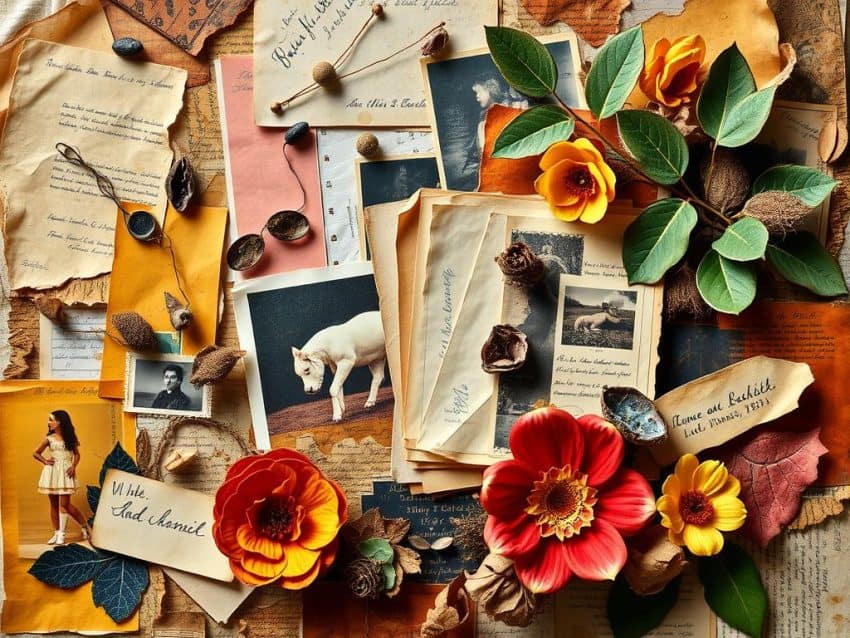
Did you know collage art is very affordable? You can use old leaflets, tissue paper, magazines, and scrap papers. All you need is paper, glue, and scissors. This makes it perfect for beginners and those on a budget.
Exploring collage art has shown me its endless possibilities. You can layer photos or create detailed designs on plain paper. It’s a craft that has been around for centuries, from Japan’s 1100s to Henri Matisse’s 20th-century works.
Collage is for everyone, from simple designs to complex scenes. It’s a way to express yourself through color and creativity. Let’s dive into some collage art tips to make your next project stand out.
Key Takeaways
- Collage art is affordable, needing only paper, glue, and scissors.
- Historical roots date back centuries, making collage a timeless craft.
- Experimentation with textures and layers can result in unique compositions.
- Materials can range from recycled items to simple craft supplies.
- The medium is accessible, allowing anyone to create without extensive training.
Exploring the World of Collage Art
Collage art is full of creativity. Artists mix different materials to make detailed works. These works can express deep feelings or tell stories.
Learning collage techniques is key for those who want to explore this art. Techniques range from simple cutting to complex layering. Using various materials, like paper and fabric, adds depth to the art.
Understanding Collage Techniques
Artists have their favorite collage methods. They often get ideas from others, showing the art world’s importance of community. Tearing paper and layering materials create interesting textures.
About half of artists like this method. Using PVA glue or glue sticks makes it easier to stick things together. This allows for more creativity in making photo montages.
Having a special place to create helps artists explore. They often keep sketchbooks to jot down ideas. This way, they can see their ideas grow over time.
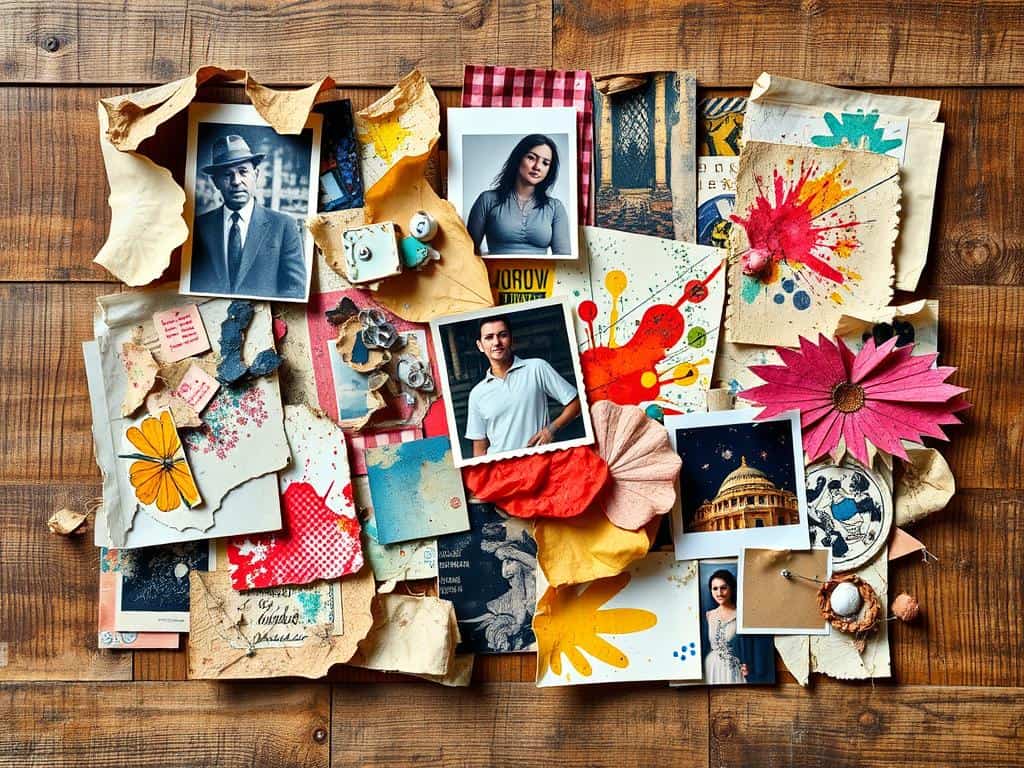
The Rich History of Collage Art
Collage art has a long history. Artists like Pablo Picasso and Georges Braque introduced the term “collage” in 1910. They moved art from traditional to more open forms.
Picasso’s early work, like “The Chair Caning,” showed how to use everyday items in art. The Dada movement later pushed art even further, adding new ideas. Learning about this history helps me appreciate collage more.
The art has evolved from flat to three-dimensional works. Artists like Benjamin West used photomontage to make social points. Understanding these roots makes me see collage’s wide range and beauty.
Collage Art Tips for Your Next Project
Collage art is a fun way for anyone to get creative. I look for materials that mean something to me or can be used in new ways. Old books, vintage postcards, and different papers add cool textures and colors.
Using these materials makes my art more interesting. It also makes me feel like I’m on an adventure.
Collecting Materials for Collage
Having a wide range of materials makes collage art more exciting. I collect personal photos, fabric pieces, and recycled paper. These add special touches to my work.
Some artists like new stuff, but I love using things I already have. The right glue is key. I use archival adhesives like Yes! Paste or gel medium. They stick well and let me layer easily.
Experimenting with Techniques
Trying new things is important in my art. I start by arranging materials without glue first. This lets me make changes and see how it looks.
I love the beauty of mistakes. Wrinkles and glue marks can create cool textures. For beginners, it’s good to test glues on different papers to avoid problems.
Being open to trying new things can lead to amazing textures and techniques.
Conclusion
Exploring collage art has opened up a world of creative projects. These projects let me express myself in unique ways. I’ve learned to mix texture, form, and color, making pieces that touch people’s hearts.
By adding powerful poems to my collages, I show how art and writing come together. This mix makes my work even more special.
Choosing the right materials is key. I use everything from magazine strips to acrylic gel mediums. Each piece adds to the emotional feel of my art.
For example, using a lotus flower symbolizes hope. This shows how I aim to share deep feelings through my collages. It’s a mix of art and self-reflection, always pushing me to improve.
As I keep exploring collage art, I see its power to spark creativity and growth. There are endless ideas to try, and I’m eager to learn more. This passion not only makes my art better but also helps me see the world in new ways.
