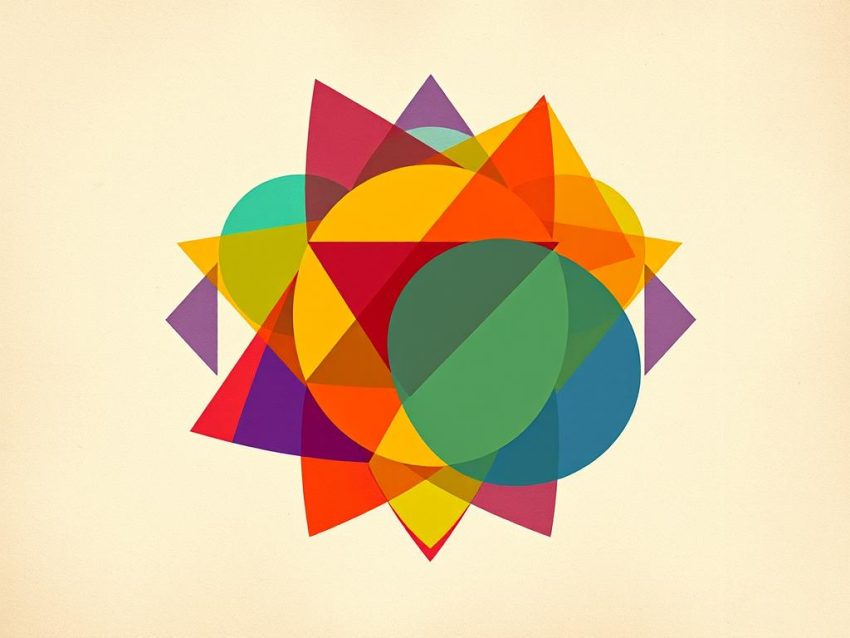
Did you know there are over 22 unique geometric design styles for graphic projects this year? This shows how versatile and powerful geometric design is in modern art. From ancient times to now, it has always been a key part of art.
It adds meaning to abstract patterns and makes today’s graphics simple yet striking. I’ll explore its history, key principles, and its role in branding and graphic art today.
Key Takeaways
- Geometric design merges mathematics with creativity, influencing various art forms.
- Historical patterns like eight-fold rosettes and tessellations illustrate its cultural significance.
- Today’s branding increasingly embraces minimalism through strong geometric shapes.
- Isometric designs offer 3D perspectives that enhance engagement in infographics and games.
- Geometric elements are used widely in textiles, packaging, and digital backgrounds.
- Utilizing color gradients with geometric shapes can leave lasting impressions.
The Significance of Geometric Design
Geometric design is more than just pretty pictures. It touches many parts of creative work. Looking at its history shows how it has shaped cultures worldwide. From ancient Egypt to today’s art, these designs carry deep meanings and connect us to the universe.
Historical Context and Cultural Impact
Geometric design comes from many cultures, often meaning spiritual or universal harmony. In ancient Greece, it was linked to beauty and balance, shaping Western art for ages. As I learn about its history, I see it as a way to share ideas about life and unity. This influence is seen in many modern arts, showing our common roots.
Geometric Patterns Across Civilizations
Geometric patterns show the heart of many cultures. The Islamic Golden Age created detailed mosaics, showing our global connection. Mesoamerican cultures also used these patterns, like eight-fold rosettes and stars, to tell their stories. Seeing these designs deepens my understanding and shows how geometric design links past and present.
Principles of Geometric Design
The principles of geometric design are key to any successful design project, like art. They help me create pieces that grab viewers’ attention. Symmetry is a big part of this, bringing balance and harmony.
This balance can show up in different ways, like when things are mirrored or rotated. It makes the design look better and feels more emotional.
Understanding Symmetry in Geometric Art
Symmetry is vital in geometric art, making things look ordered and connected. It can be reflective or rotational, creating harmony. This harmony is not just pleasing to the eye but also touches the heart.
I look into different symmetries to see how they can change traditional art. This makes the art more interesting and engaging.
The Role of Repetition and Rhythm
Repetition is a strong tool for creating rhythm in design. By repeating shapes and patterns, I make my artwork feel more unified. This rhythm helps the viewer’s eye move smoothly through the design.
Using repetition also makes the audience feel more at ease. It’s about finding the right balance between repetition and rhythm to make a design pop.
Proportions and Ratios that Create Beauty
Using proportions and ratios, like the golden ratio, can make geometric designs more beautiful. These math-based rules help create balance and harmony. In my work, I focus on how each element fits together.
This focus on proportions and ratios makes the design more appealing. It not only catches the viewer’s eye but also makes the artwork more impactful.
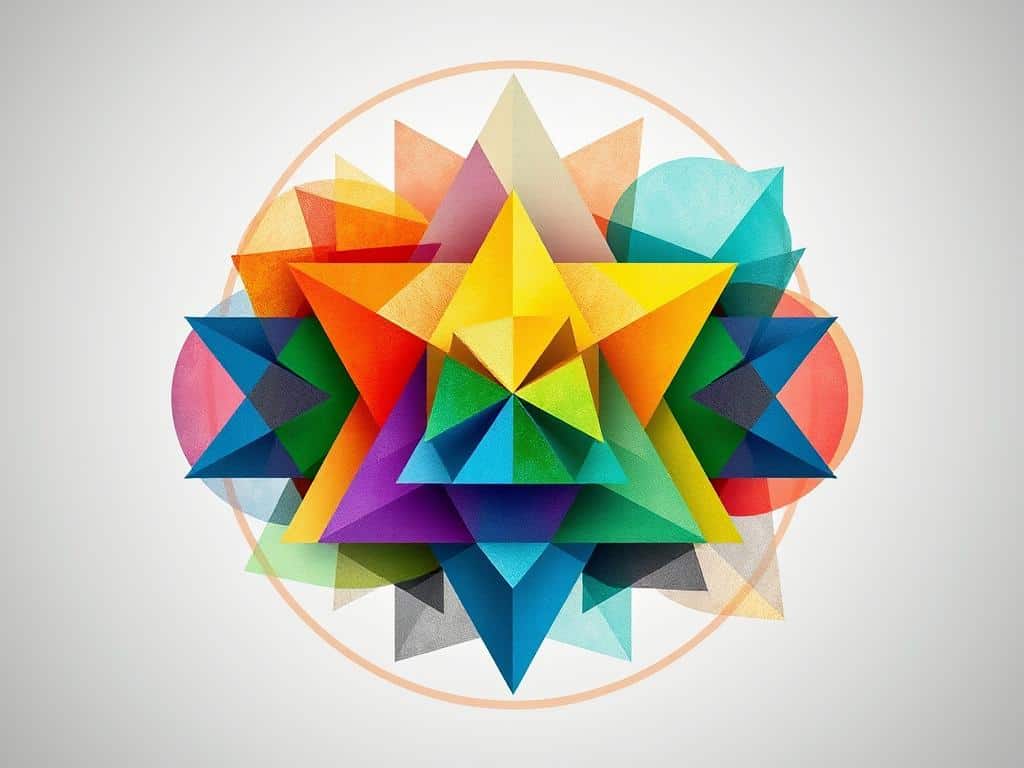
Geometric Design in Contemporary Graphic Art
Geometric design is big in today’s graphic art, making visuals pop across many platforms. It comes from a deep history but also fits today’s style trends. This makes it both timely and impactful.
Exploring Minimalism and Simplicity
Minimalism is key in today’s graphic art, focusing on clear, simple designs. Shapes like circles and squares are used to make bold, easy-to-understand designs. This style not only looks good but also gets messages across well, fitting perfectly with geometric patterns in branding.
Using simple lines and shapes makes designs elegant and easy to remember. This is great for grabbing people’s attention.
The Rise of Isometric Design Techniques
Isometric design is becoming a big deal in graphic art, adding depth to flat designs. It uses geometric shapes to create a 3D look without losing minimalism. This method makes graphics stand out, making them both interesting and easy to get.
More and more, people want designs that mix isometric with traditional geometric patterns. This creates eye-catching content that grabs people’s attention.
Utilizing Geometric Patterns in Branding
Branding with geometric patterns has changed how companies show themselves visually. The clean look of geometric shapes helps brands get noticed and remembered. About 70% of designers use these shapes in logos and packaging, showing how effective they are.
Using geometric patterns can make a brand’s visual identity stronger. This helps it stand out in crowded markets, whether online or in stores.
Conclusion
Geometric design has a timeless appeal that connects us to both the past and present. It shows how math and creativity come together in art. This blend adds beauty and innovation to our world.
Exploring geometric design, I see how symmetry, rhythm, and proportion create beauty. These elements help us understand the depth of geometric art. Each line and shape tells a part of a larger story.
This journey shows that geometric design is more than just beauty. It shapes how we see and experience the world. By combining art and practicality, we unlock its full power. This opens up a world of endless possibilities and inspiration.
