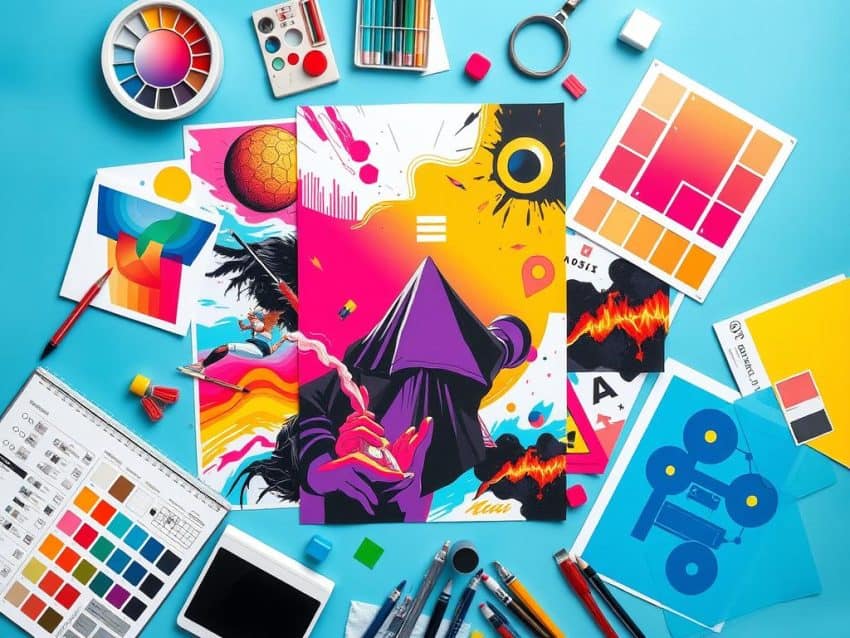
Did you know posters are a top advertising tool in many fields? They’re used in restaurants, music festivals, and sports events. To grab attention fast, you need to know how to design posters well. A good poster is both creative and clear, showing off what’s important.
In this article, I’ll share tips from experts to help you with your poster design. Whether it’s for a concert or your business, these techniques will improve your designs. Let’s dive into making layouts that stand out and leave a mark.
Key Takeaways
- Posters can effectively capture audience attention across various industries.
- Proper design guidelines are essential for maximizing visual impact.
- High-quality images enhance the overall effectiveness of a poster.
- Typography and color choice significantly influence viewer perception.
- Utilizing negative space is key for clear information.
- A focused layout leads to better engagement and message delivery.
The Importance of Visuals in Poster Design
Visuals are key in poster design, as they share ideas better than text alone. Poster sessions let you show more posters than talks, making it easier to share research. The right visuals can connect with your audience deeply.
Using High-Quality Images
High-quality images make event posters more appealing. A sharp, well-made image grabs attention and shows professionalism. Bad images can pull viewers away from your message.
Using eye-catching images makes people want to dive into your content. This boosts their interest and gets them involved.
Incorporating Graphs and Charts
Graphs and charts are great for showing data in posters. They help people understand complex info quickly. For example, they can show trends or changes over time.
Good graphics make science easier to get. They make your poster more effective and help organize your information.
Organizing Information with Visual Elements
Keeping your poster easy to read is key. Using visual elements like columns or boxes helps. They guide the viewer’s eye and make the layout clear.
A well-organized layout encourages people to explore. Showing important parts like the Title, Abstract, and Conclusions clearly helps viewers follow your poster.
Creative Layouts for Effective Communication
Creating effective posters depends a lot on the layout. Good layouts grab attention and share messages fast. A strong central focus is key, drawing the viewer in and leading them to the main info or image.
This can be done with striking visuals or bold headlines that pop against the background.
Defining the Central Focus
To find the central focus, use leading lines or design contrast. Visuals should guide the viewer’s eyes to the most important part. This makes it easy for them to quickly understand the main idea.
Focal points are the design’s heart. Highlighting them with the right colors can make a big difference.
Utilizing White Space for Readability
White space is vital in poster design, for looks and for reading ease. Good layouts use about 30% of the design for white space. This gives each element room to shine.
This balance stops overcrowding and makes it easy for viewers to take in info. A clean layout helps people remember more and stay interested.
Creating Contrast to Enhance Impact
Design contrast makes things stand out and can highlight key details. For example, yellow text on a black background grabs attention right away. Different colors, shapes, and fonts can create contrast, making the design more engaging.
A layout with good contrast shares messages clearly and looks good too.
Poster Design Techniques for Engaging Audiences
Creating engaging posters involves using color psychology, typography, and organizing information. Each part is key to grabbing attention and sharing messages well.
Color Psychology in Poster Design
Choosing colors affects how people feel and what they think. Bright colors can make people remember things better by up to 80%. Using colors wisely makes the poster’s look match its message.
Using the same colors in different designs can make people respond positively by 72%. This shows how important picking the right colors is.
Typography and Font Selection
Typography is important for making things easy to read and interesting. Using no more than three fonts keeps things looking good and clear. Using clear fonts can help people remember information better by 50%.
Making headings stand out with different sizes helps grab attention. This makes it easier for people to follow along with the content.
Hierarchical Arrangement of Information
Organizing information in a clear order is essential. Posters that are well-organized can help people understand better by up to 45%. Important details like event titles should be highlighted with size and placement.
This way, people can quickly get the main points. It makes them more interested in what the poster is saying.
Conclusion
Effective poster design is key to grabbing attention and engaging people. This article covered important tips for making great posters. It showed how using high-quality images, creative layouts, and engaging techniques can make a difference.
Using color psychology, typography, and a clear structure helps get messages across. Visual aids like charts and graphs make data clear, even from a distance. Keeping white space and text readable is also important for comfort and engagement.
Learning these basics helps me make posters that grab attention in different settings. Whether it’s for a conference or a public event, these tips ensure my posters are effective. They help me present information in a way that’s clear and persuasive.
