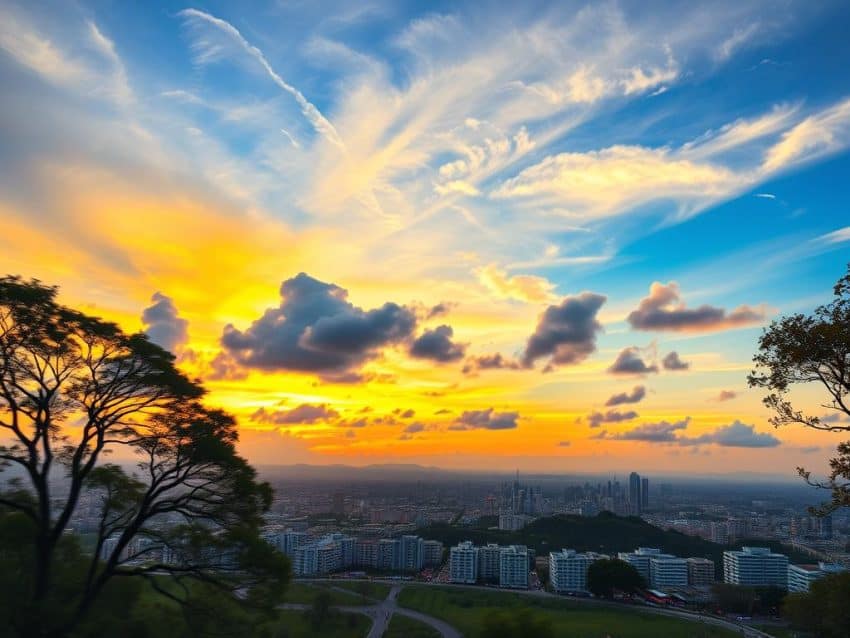
Did you know it takes 7,200 frames to make a five-minute time-lapse video at 24 frames per second? This shows how detailed and beautiful time-lapse photography can be. I’m here to help beginners learn the basics of time-lapse techniques and improve their photography skills.
Time-lapse photography lets me show how time moves in a beautiful way. It can capture everything from flowers blooming to city life. This guide will make time-lapse photography easy to understand. You’ll learn about the basics, what you need, and how to start your own time-lapse project.
Key Takeaways
- Time-lapse photography offers a unique way to capture the passage of time.
- Creating a time-lapse involves capturing numerous frames, with a standard of 24 fps for cinematic quality.
- Essential equipment includes a camera, intervalometer, tripod, and appropriate software.
- Different types of time-lapses, such as HDR and astro time-lapse, require specific techniques.
- The success of time-lapse videos often hinges on careful planning and post-production adjustments.
Introduction to Time-Lapse Photography
Time-lapse photography lets us see time in a new way. It captures images at set times, showing us moments we might miss. It’s amazing to see hours of action in just a few minutes.
What is Time-Lapse Photography?
Time-lapse photography takes pictures at set times and plays them back fast. For example, recording at one frame per second makes it play back 24 times faster. This creates a cool illusion of motion, showing us changes in landscapes or events.
History and Evolution of Time-Lapse Techniques
The history of time-lapse photography started in the late 19th century. Georges Méliès made a famous film called “Carrefour De L’Opera” in 1897. Over time, new techniques and camera tech have made it easier for everyone to try this art.
Understanding Motion and Time in Time-Lapse
Time-lapse photography is all about motion and time. It shows us changes that happen slowly. Watching clouds move or city life can be really captivating. It helps us see the world in a new way.
Essential Equipment for Time-Lapse Photography
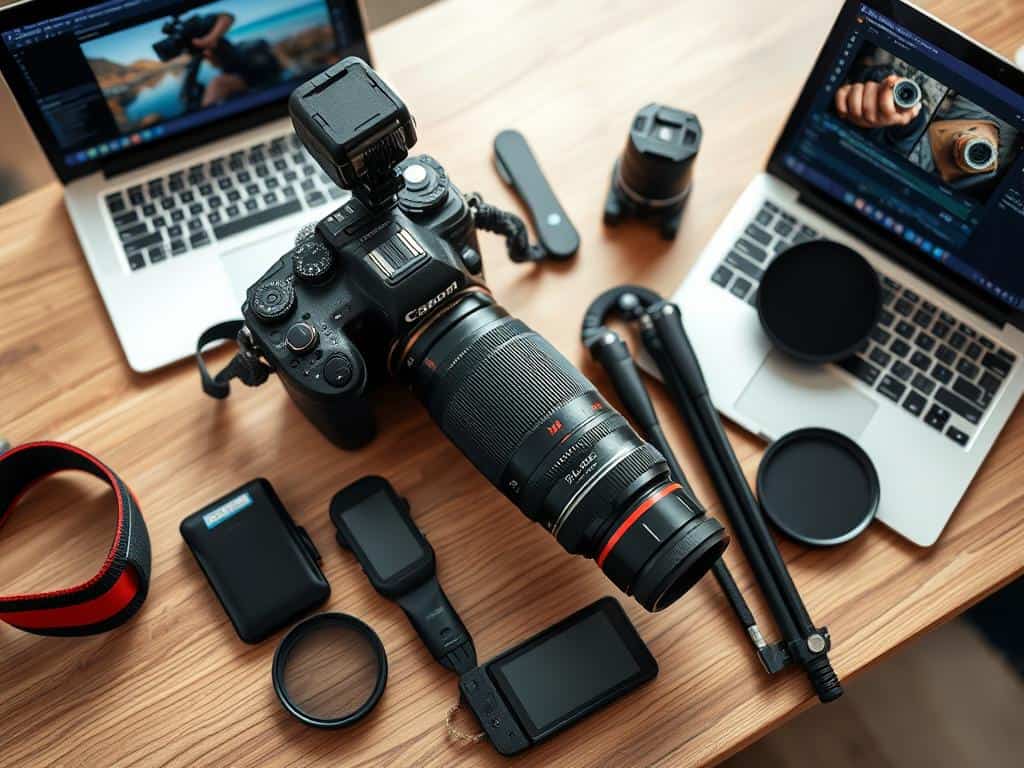
Starting a time-lapse photography project means choosing the right gear. The right equipment can make a big difference in the quality of your photos. You’ll need a good camera, a stable tripod, and an intervalometer for the best results.
Camera Choices and Lens Considerations
I usually pick a DSLR or mirrorless camera for time-lapse. They take better pictures than regular video cameras. This is key for capturing small details and wide scenes.
Full-frame cameras are best for shooting at night. They take clearer pictures in the dark with less noise. Choosing the right lens can also change your photos. It lets you focus on different things, from big landscapes to small details.
The Importance of a Stable Tripod
A sturdy tripod is essential for time-lapse. It keeps the camera steady during long shoots. Even a little shake can ruin your footage.
Using a motorized tripod head helps with smooth movements. It lets you take cool angles and views that make your photos stand out.
Using an Intervalometer for Accurate Shots
An intervalometer is key for taking pictures at set times. It can be built into your camera or used as a separate device. This lets you focus on your shots without worrying about the camera.
Planning your shots with an intervalometer helps you make amazing time-lapse videos. These videos grab people’s attention and keep them watching.
Time-Lapse Photography: Settings and Techniques
Mastering time-lapse photography settings and techniques is key to a great video. The right exposure settings are vital for capturing vibrant visuals. I shoot in manual mode to control aperture, shutter speed, and ISO.
Keeping the aperture between f/8 and f/11 helps capture detailed scenes. This range ensures everything from start to finish is clear.
Choosing the Right Exposure Settings
Correct exposure settings are critical to avoid unwanted changes in footage. A shutter speed double the frame rate gives a cinematic feel. For example, at 24 fps, I use a 1/50 second shutter speed.
This setting reduces motion blur and keeps the video natural. Manual settings help avoid flicker and exposure issues.
Understanding Frame Rate and Intervals
Frame rate and intervals greatly affect the time-lapse’s flow. I usually choose a frame rate of 24 fps for a movie-like feel. The interval between shots varies based on the scene.
For fast scenes, I shorten intervals to a few seconds. In construction tracking, intervals of 10 to 30 minutes work well.
Creating Smooth Motion with Long Exposure
Long exposure techniques add smooth motion to my videos. This method turns fast scenes into smooth transitions. It keeps the video engaging.
By using controlled exposure, the right frame rate, and strategic intervals, I create stunning time-lapse sequences. These sequences effectively show how time passes.
Conclusion
Time-lapse photography is truly captivating. It turns everyday scenes into breathtaking stories. This guide has given me the basics to start my time-lapse adventure.
I’m excited to explore this art form. I can capture everything from a flower blooming to city life’s hustle. Using the right tools, like a tripod and intervalometer, is key for smooth footage.
Now, I’m ready to try different time-lapse projects. I’ll document tides or city changes. My goal is to share unique views and grow as an artist in visual storytelling.
