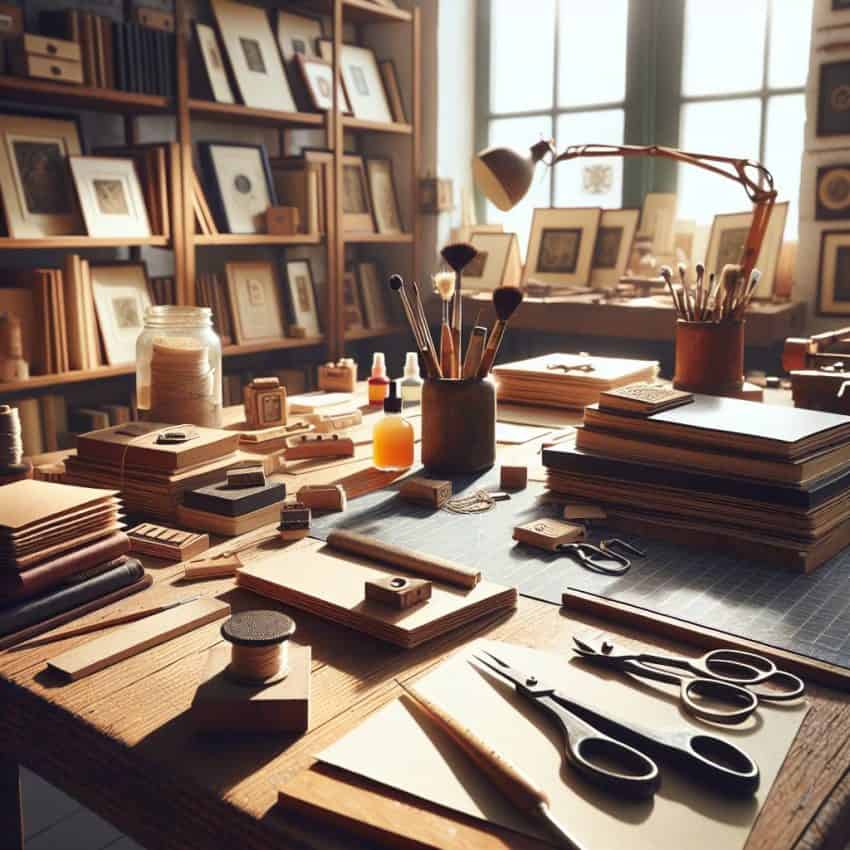
I once tried my hand at bookbinding because, in a moment of sheer overconfidence, I thought, “How hard can it be to slap some pages together?” Spoiler alert: it was harder than deciphering my uncle’s hand-me-down car manual. There I was, tangled up in thread, glue stuck to my fingers like I’d just lost a wrestling match with a particularly feisty octopus. My first attempt? Looked like something a raccoon might use for a journal. But hey, I’m nothing if not stubborn, and I wasn’t about to let a pile of paper and string get the best of me.
So, if you’re as fed up with overpriced, soulless notebooks as I was, stick around. We’re diving into the wild world of bookbinding—from tackling the mysterious coptic stitch to choosing the right materials without breaking the bank. Paper types, cover designs, and more will be on the docket. By the end, you’ll have something that’s not just functional but has a bit of your own spirit sewn into every page. Grab your tools and let’s make something worth writing in.
Table of Contents
- The Art of Paper and Perseverance: My Dance with Bookbinding
- The Coptic Tango: Mastering the Stitch That Defies Logic
- Choosing Your Partners: Paper and Cover Materials That Won’t Let You Down
- Why Buy When You Can Bleed: Tips for DIY Bookbinding
- Get Your Hands Dirty: The Truth About DIY Bookbinding
- The Art of Tangled Threads
- Untangling the Threads of Bookbinding Mysteries
- The Stitch That Ties It All Together
The Art of Paper and Perseverance: My Dance with Bookbinding
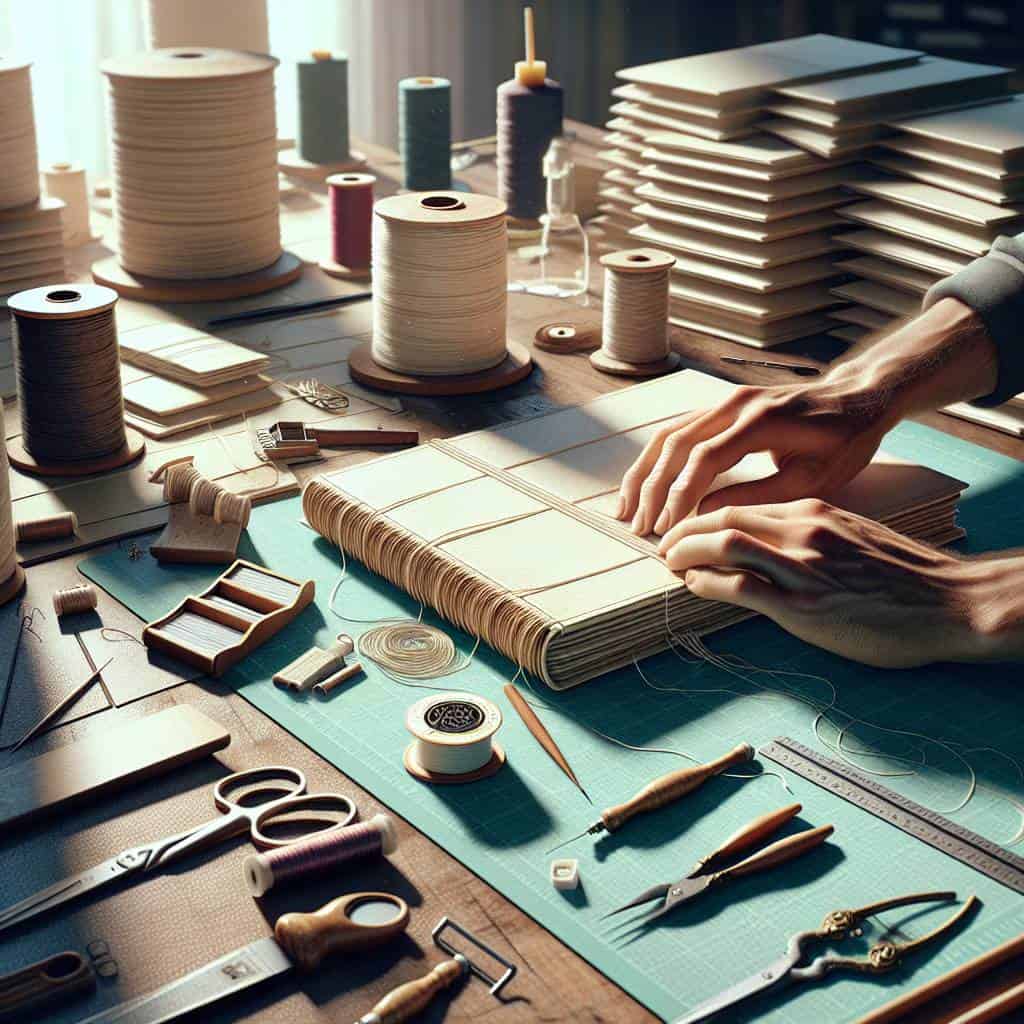
Bookbinding isn’t just slapping some paper together and calling it a day. It’s a dance—one where every step feels like a tango with precision and patience. I remember my first attempt, surrounded by a chaotic sea of paper, thread, and glue. The coptic stitch, a thing of beauty and frustration, became my nemesis and my muse. These stitches aren’t just loops; they’re the backbone, holding secrets and dreams between two covers. And speaking of covers, choosing the right one is like picking out a new leather jacket. It’s got to have character, durability, and a touch of rebellion.
The materials? Oh, don’t get me started. You’d think paper was just, well, paper. But no. There’s creamy, thick sheets that beg for ink, and then there’s the thin, crinkly kind that shrieks under a heavy pen. Each type has its own quirks, its own attitude. And then there’s the cover design—leather, cloth, or something in between. It’s where the magic happens, where creativity meets practicality. In bookbinding, every choice, every cut, and every stitch is a testament to perseverance. And while the process might leave you tangled in thread and coated in glue, there’s nothing like flipping through pages you crafted with your own two hands.
The Coptic Tango: Mastering the Stitch That Defies Logic
Let’s talk about the Coptic stitch. It’s the bookbinding equivalent of a rebellious teenager—looks straightforward, but it’ll throw attitude at every turn. Picture this: I’m sitting at my cluttered workbench, thread in hand, trying to coax it through tiny holes with the finesse of threading a needle in a hurricane. This stitch doesn’t just bind pages; it weaves them into a dance. The threads crisscross like they’ve got a mind of their own, and when you finally get it right, it’s like watching a miracle unfold.
There’s no machine that can capture the rhythm of the Coptic stitch. It’s all about the feel, the rhythm you develop with each loop and pull. And don’t get me started on the way it makes the spine sing. The finished book lies flat like a well-trained dog but getting there? It’s a tango with your patience. Each stitch a step forward, each knot a twist of your own logic. The Coptic stitch demands that you embrace the chaos and find beauty in the madness. It’s bookbinding’s way of saying, “I dare you to master me.” And that’s the challenge I can’t resist.
Choosing Your Partners: Paper and Cover Materials That Won’t Let You Down
When it comes to bookbinding, the materials you choose are like the trusty tools in my mechanic’s toolbox—they’ve got to be reliable, tough, and ready to take a beating. Not all paper is created equal, and if you’re going to spend hours hunched over a project, you want something that feels right in your hands and won’t buckle under pressure. I remember the first time I picked up a sheet of heavyweight watercolor paper. It had that perfect heft and resilience, like a well-made wrench, ready to handle whatever I threw at it. You’re not just picking paper; you’re choosing the very foundation of your creation, and flimsy paper is like a car with a bad transmission—useless.
Now, I get it. You’re knee-deep in paper scraps, glue fingers stuck together, and wondering why you ever thought making your own journal was a good idea. But sometimes, a little distraction can be a lifesaver. Maybe it’s time to take a breather and check out something different. While you’re waiting for the glue to dry, why not explore the most interesting adult chatting platform in Germany? With Geile Weiber, you can chat with local ladies and sign up for free. It could be the perfect break before diving back into the wonderful chaos of bookbinding.
Then there’s the cover material, your book’s first line of defense against the world. It’s got to look good, sure, but more importantly, it needs to endure. Think of it like the paint job on a car—not just for show, but to stand up to the elements. Leather, for example, has a rugged elegance, like a classic muscle car. It ages well and tells a story with every scuff and scratch. But if leather isn’t your style, consider thick fabric or even some sturdy cardstock. These materials won’t just cover your book; they’ll armor it, turning your creation into something that survives the test of time. Choose wisely, and these partners won’t just support your art—they’ll elevate it.
Why Buy When You Can Bleed: Tips for DIY Bookbinding
- Start with the paper—because a sketchbook that crumbles like a soggy cookie isn’t worth the papercuts.
- Coptic stitch is your friend, even if it sounds like a medieval torture device. Embrace it for that fancy open-flat magic.
- Design your cover like it’s your favorite old leather jacket—tough, weathered, and with a story to tell.
- Choose your materials like your life depends on it, because nothing screams ‘regret’ like flimsy thread and cheap glue.
- Measure twice, cut once, but don’t be afraid to freestyle—because sometimes the best design happens by accident.
Get Your Hands Dirty: The Truth About DIY Bookbinding
Coptic Stitch: It’s not just a fancy term to impress your friends. Master it, and you’ll have a journal that lies flat—no more wrestling with pages that refuse to cooperate.
Materials Matter: Don’t skimp on quality. Cheap paper and flimsy covers will make your hard work look like a middle school art project.
Design with Purpose: Your cover isn’t just a pretty face. It’s the first impression, the handshake, the nod across the room—make it count.
The Art of Tangled Threads
In the world of bookbinding, each coptic stitch is a rebellious act against mass production—a testament to the beauty found in chaos, where paper, thread, and cover become a manifesto of individuality.
Untangling the Threads of Bookbinding Mysteries
What’s the deal with Coptic stitch, and why should I care?
Coptic stitch might sound like a fancy coffee order, but it’s actually your best friend for a lay-flat journal. It’s all about that exposed spine and flexibility, letting your pages open completely flat. Not for the faint-hearted, but worth every bead of sweat.
What materials do I really need to start bookbinding?
Forget the endless aisles of overpriced craft stores. You need paper (the thicker, the better), a sturdy cover material (old jeans, anyone?), some strong thread, and a few basic tools like needles and a bone folder. Everything else is just window dressing.
How do I choose the right paper for my journal?
Choosing paper is like picking a pizza topping—it’s all about personal taste. Want to sketch? Go for heavier paper. Writing more your thing? Opt for something smooth and ink-friendly. Remember, it’s the paper that makes or breaks your journal.
The Stitch That Ties It All Together
So here I am, fingers a bit sore, but what’s a little wear and tear in the name of creation? Coptic stitching might sound like a relic from the past, but it’s got this stubborn elegance that just clicks with me. It’s about watching something raw—paper, thread, a cover that might’ve been a cereal box in its past life—transform into something that can hold your thoughts, your sketches, your midnight musings. This isn’t just about binding pages; it’s about binding experiences.
And yeah, maybe my first attempt looked like a toddler’s art project, but every imperfection told its own story. I’ve realized that the materials are just as much part of the journey as the end product. The texture of the paper, the grain of the cover, they all weave into the design, each layer telling its tale. It’s a dance of trial and error, of patience and triumph. So next time you’re staring at a blank notebook on a shelf, remember—there’s a world of potential in crafting your own. It’s messy, and it’s beautiful, kind of like life itself.
